
My3Dify - Explore&Read Stories
Mi SikePuzzle
4.3430.00 Reviews
- Version
- 1.2.7
- Installs
- 50.00K
- Age Rating
- Teen
Screenshots


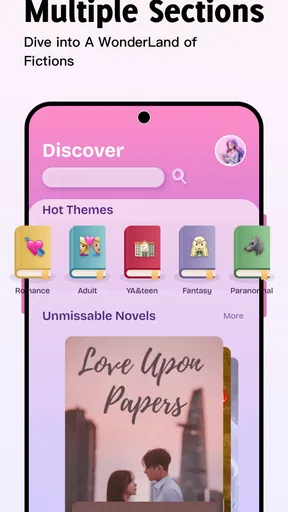
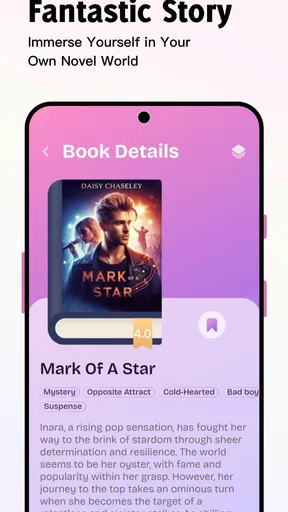
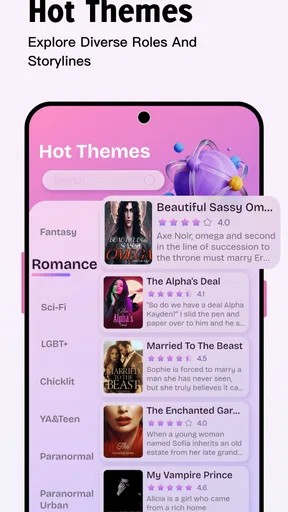
Our Review of My3Dify - Explore&Read Stories
 Analysis by Appyee
My first impression of My3Dify was that it wants me to slow down rather than rush through a conventional puzzle board. It presents itself as a story-focused puzzle game in which turning the page is part of the appeal, and its central promise is simple: each new page should feel like an opening into another small world. That gives the experience a more exploratory mood than the usual match-three or logic-puzzle alternative.
I reviewed it as a free game from Mi Sike, and I found the best way to understand it was not to treat it like a score-chasing time killer. Its attraction comes from the relationship between reading, discovery, and whatever puzzle interaction is placed in front of me. The store summary points toward stories and page-by-page exploration, while the short description is simply “My3Dify,” so the actual appeal becomes clearer once I consider how the game handles goals, progress, challenge, and the temptation to keep going.
How the page-by-page idea shapes the first minutes
The early goal feels deliberately modest: open the next page, understand what the current scene is asking from me, and see what lies beyond it. That is a useful starting point because it avoids burying the player under a large objective. I do not need to learn a complicated rule set before I can appreciate the atmosphere. The next page itself becomes the immediate reward.
That structure suits people who enjoy puzzle games for their sense of discovery rather than for competition. In a standard logic game, the first question is often whether I can solve a board efficiently. Here, I am more interested in what the page is building toward. The puzzle is not just an obstacle between menus; it is part of the rhythm that makes the story move.
I also noticed an important trade-off in this approach. A page-based experience can make small steps feel meaningful, but it can also make the player dependent on presentation. If a scene does not create curiosity, the underlying puzzle has to carry more of the experience. This is why I would not recommend approaching the game expecting the endless variety of a traditional puzzle collection. Its appeal is narrower and more atmospheric.
For a short evening session, that narrow focus works well. I can play until I reach a natural stopping point instead of feeling that I have abandoned a large competitive run. Someone waiting for an appointment or taking a quiet break may appreciate that gentle sense of progress. Someone looking for rapid rounds, leaderboards, or constant score improvement should probably choose a different kind of puzzle game.
What counts as progress here
The most useful progress signal is the feeling that the world is unfolding one page at a time. That is more personal than a number on a scoreboard. I know I am moving forward when a new part of the story or setting becomes available, and that creates a clear reason to attempt the next challenge.
This kind of progression is especially accessible to players who dislike games that punish them with a complicated interface. The page metaphor gives the experience an understandable shape: finish what is in front of me, then continue reading and exploring. It also makes the game easier to pick up after a break because the current page provides a reminder of where I was in the journey.
At the same time, story-based progress is not as satisfying for every player as a visible collection of upgrades, ranks, or increasingly powerful tools. If I need a strong sense of ownership over a growing system, this game may feel light. Its reward is primarily access to what comes next, not the construction of a large personal strategy.
That distinction matters when deciding whether the free download is worth trying. The game is free, but it includes optional in-app purchases ranging from $0.99 to $99.99 per item. I would therefore approach it as a free introduction to its story-and-puzzle format, while keeping purchases firmly secondary to the question of whether the basic progression is enjoyable.
Difficulty and the value of a slower challenge
The difficulty curve is best judged by how naturally the game lets the player understand each page before demanding a solution. A story-led puzzle game benefits from giving me time to notice details and form an idea of what to do. If the challenge becomes too obscure too quickly, the atmosphere turns into frustration; if everything is immediately obvious, the page loses its purpose as a puzzle.
My practical advice is to treat each scene as something to inspect rather than something to attack. I pause before tapping repeatedly, look for the relationship between the page and the task, and try a small number of deliberate actions. This approach is more effective than using random input, and it preserves the sense that I am discovering the world rather than forcing it open.
A second useful habit is to stop after a genuine block instead of spending a long session repeating the same attempt. Because the game is organized around pages, a short break can make the current problem easier to read when I return. That is a small but important advantage over puzzle games built around continuous timed play, where stopping may feel like losing momentum.
The trade-off is that players who enjoy demanding, repeatable brainteasers may find the story pacing more important than the raw difficulty. The game’s challenge has to serve the journey. It is not the right choice if my main goal is to test myself against increasingly complex systems for hours at a time.
Why the pacing can keep me playing
The strongest retention idea is the next-page question: what will the following scene reveal, and how much effort will it take to reach it? That is a softer form of motivation than chasing a high score, but it can be surprisingly effective when the presentation creates curiosity. I often continue with a game like this not because I need another reward, but because I want to complete the small narrative unit already in progress.
There is also a natural stopping rhythm. Completing a page gives me a clean place to pause, which makes the game suitable for players who prefer controlled sessions. That is useful in everyday life: I can play during a commute break, finish a small section, and put the phone away without feeling that I have left an unfinished match or a timed challenge running.
However, this pacing can create retention pressure of its own. If the next page is the main reason to continue, any interruption in the flow can feel more noticeable than it would in a self-contained puzzle round. Optional purchases may also affect how comfortable a player feels about continuing, so I recommend deciding in advance whether I am willing to spend anything. The free entry point is appealing, but a player who dislikes purchase prompts or progression friction should remain cautious.
For parents considering it for a younger player, the Teen content rating is worth taking seriously. I would not assume that a story-driven presentation automatically makes it suitable for children. The rating places it closer to an older audience, and that should guide the decision even if the game looks approachable at first glance.
Who will enjoy the format most
I would recommend this game to someone who likes puzzles with a narrative frame, visual discovery, and a calm sense of forward motion. It is particularly suitable for players who want a game that can be sampled in short sessions without requiring a competitive mindset. The page structure also makes it a reasonable choice for readers who enjoy interactive stories but want more participation than simply tapping through dialogue.
It may also work for a player who has become tired of familiar puzzle loops. Match-three games are excellent when I want quick, repeatable action, but their boards can begin to feel interchangeable. My3Dify offers a different reason to continue: the setting and the next page matter as much as the immediate move.
I would skip it if I am searching for multiplayer competition, a deep upgrade economy, or a puzzle game that can be played indefinitely without relying on story momentum. I would also look elsewhere if I want precise difficulty control or a large library of unrelated puzzle modes. This experience is more focused, and that focus is both its identity and its limitation.
Everyday use, device expectations, and practical fit
On a normal day, I can imagine opening it after dinner when I want something more engaging than passive scrolling but less demanding than a long strategy session. I would play through a page, think about the current puzzle, and stop when the scene reaches a natural transition. That makes it feel closer to reading a short interactive chapter than completing a traditional arcade run.
The game is available for Android devices running version 7.0 or later, which gives it a broad technical starting point for many older phones and tablets. The current version is 1.2.7, so I would check that my device meets the operating-system requirement before installing. Since the game’s identity depends on pages and worlds, a larger screen may make the experience more comfortable, although I would still judge it by how clearly the scenes and interactions are presented on my own phone.
Its audience appears established enough to make trying it feel reasonable: the game has passed 50 thousand installs, with an average rating of 4.3 from about 1.8 thousand ratings and 430 reviews. Those figures do not replace personal taste, but they suggest that the page-based concept has found a receptive group rather than existing only as an experiment with no visible audience.
The developer, Mi Sike, keeps the identity of the game closely tied to its central idea instead of presenting it as a broad puzzle platform. That is helpful when setting expectations. I would install it for the story-world exploration, not because I expect it to replace every other puzzle game on my device.
How it compares with familiar puzzle alternatives
Compared with match-three games, this is less about rapid repetition and more about context. A match-three board usually gives me immediate feedback, short objectives, and a loop that remains enjoyable even when I ignore any story. Here, I need to care about the page and the world around the puzzle. The reward is less mechanical and more exploratory.
Compared with pure logic games, it places more weight on mood and progression. A sudoku-style or grid-based title can be satisfying because the rules are stable and the difficulty can be measured directly. My3Dify is a better fit when I want the act of solving to move me through a setting. It is a weaker fit when I want a clean, abstract test with no narrative layer.
Compared with interactive fiction, it asks for more active attention than simply reading. The page is not only a container for text or images; it is the point at which exploration and puzzle-solving meet. That makes it interesting for players who want a middle ground, although readers seeking a long, detailed novel may find the game’s puzzle focus more prominent than its prose.
One non-obvious advantage of this middle ground is that it can change the emotional meaning of a mistake. In a score-based game, a failed attempt is usually a lost opportunity for efficiency. In a story-led page, it can instead be a signal to look again at the scene and understand its logic. That makes patient observation more valuable than fast reflexes.
Small habits that improve the experience
I would begin each new page without immediately searching for the fastest possible action. First, I would identify what has changed from the previous scene and what the game appears to be asking me to notice. This reduces the temptation to tap through the presentation and helps preserve the connection between the puzzle and the story.
I would also use short sessions as a deliberate tool rather than treating them as a compromise. The page structure gives me natural checkpoints, so playing for a limited time can prevent the experience from becoming repetitive. If I find myself continuing only because I feel pressured to reach the next unlock, that is a good moment to stop and decide whether the story is still holding my attention.
Finally, I would keep purchases separate from progress decisions. Because individual in-app items can cost from $0.99 up to $99.99, I would not buy anything simply to remove impatience from a difficult page. I would first decide whether the free experience already fits my preferences, then consider spending only if the value feels clear and comfortable.
My verdict on the progression
My3Dify works best when I accept its priorities: pages over endless boards, discovery over competition, and story momentum over a large progression machine. The early goals are easy to understand, the next page provides a visible reason to continue, and the slower rhythm makes it suitable for thoughtful breaks. Those qualities give it a distinct place among puzzle games.
Its limitations are just as clear. Players who need deep systems, aggressive difficulty, or constant measurable improvement may find the experience too dependent on atmosphere and curiosity. The presence of optional purchases also means I would pay attention to how I choose to continue, especially if I am sensitive to progression pressure.
Overall, I would recommend giving this free puzzle game a try if the idea of opening interactive story pages into new worlds sounds more appealing than another familiar board. I would not present it as a universal replacement for logic, arcade, or match-three games. Instead, I see it as a focused alternative for quiet sessions, with enough structure to encourage one more page while still allowing me to put the phone down when the moment feels complete.
Verdict
Strengths of My3Dify - Explore&Read Stories
- Immersive 3D scenes make story exploration more engaging.
- Interactive elements encourage children to discover details independently.
- Visual storytelling can support readers who struggle with long text.
- A creative format may help build interest in reading and imagination.
- Suitable for short reading sessions on mobile devices.
Limitations of My3Dify - Explore&Read Stories
- 3D content may consume more battery than a standard reading app.
- Older phones may experience slower loading or reduced visual quality.
- The interactive format may distract from the story’s written content.
- Limited story choices could reduce replay value for frequent readers.
- Some features may require an internet connection or additional downloads.
Similar Picks in This Category
View All
Block Blast!
HungryStudio4.8

Braindom: Brain Games Test
Lahana Game Studio4.6

AMAZE!
CrazyLabs LTD4.6

Sudoku - Classic Sudoku Puzzle
Oakever Games4.7

Art Puzzle - Puzzle Games
Easybrain4.8

Amaze GO!
Oakever Games4.9
Frequently Asked Questions
What is My3Dify - Explore&Read Stories?
My3Dify - Explore&Read Stories is an interactive reading app designed to make stories feel more immersive through 3D-style visuals, animated scenes, and engaging content. Instead of presenting every story as plain text, the app combines reading with visual exploration, helping users interact with characters, environments, and story elements while progressing through different narratives.
Is My3Dify - Explore&Read Stories suitable for children?
The app may be appealing to children and younger readers because of its colorful presentation, interactive scenes, and story-focused design. However, parents should review the available content, age recommendations, and privacy settings before allowing independent use. Some stories or features may be better suited to specific age groups, and parental supervision is recommended for younger users.
Does My3Dify require an internet connection?
An internet connection may be needed to download the application, load new stories, access online content, or receive updates. Whether individual stories can be read offline may depend on how the app stores content after it has been opened or downloaded. Users with limited mobile data should check the app’s behavior over Wi-Fi before using it extensively away from home.
Is My3Dify free to download and use?
My3Dify may be available to download at no initial cost, but the overall experience can include optional purchases, premium stories, subscriptions, advertising, or other paid features depending on the current version and platform. Before starting a purchase or subscription, users should carefully check the store listing, payment details, renewal terms, and cancellation options.
What devices are compatible with My3Dify - Explore&Read Stories?
Compatibility depends on the operating system, device model, and minimum software requirements published on the Google Play Store or Apple App Store. Because interactive 3D content can require additional processing power and storage, older phones or tablets may provide a less fluid experience. Users should verify the listed requirements and keep sufficient free storage available before installing.
Play our best games!


